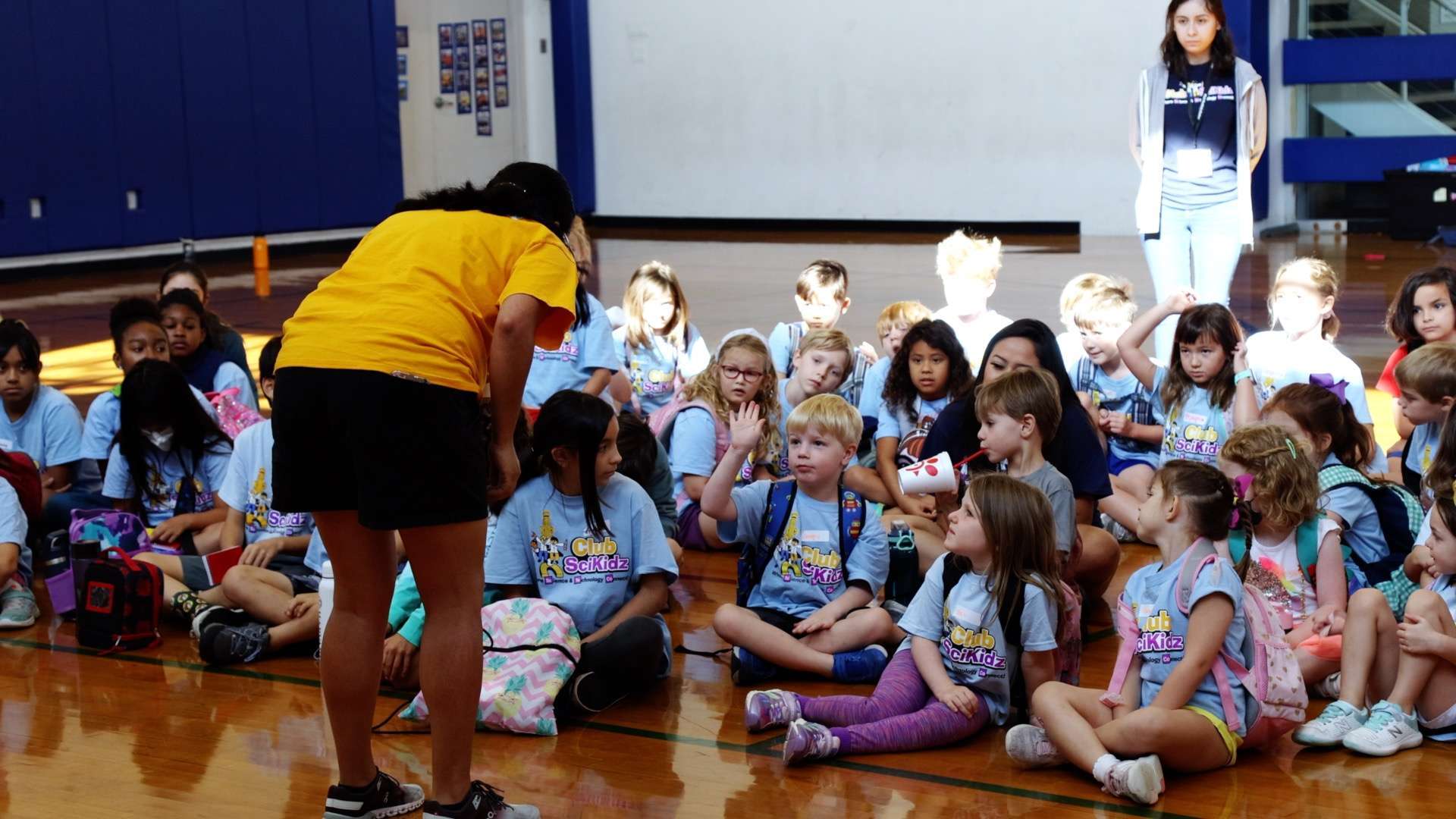
Thanksgiving week is full of kitchen science, and you do not need special equipment to explore it. The experiments below use ordinary groceries and pantry items, and each one ends with a question kids can test for themselves. An adult should supervise every experiment, especially anything involving heat.
1. Do cranberries float — and bounce?
You will need: a bowl of water, a handful of fresh cranberries, and a plate.
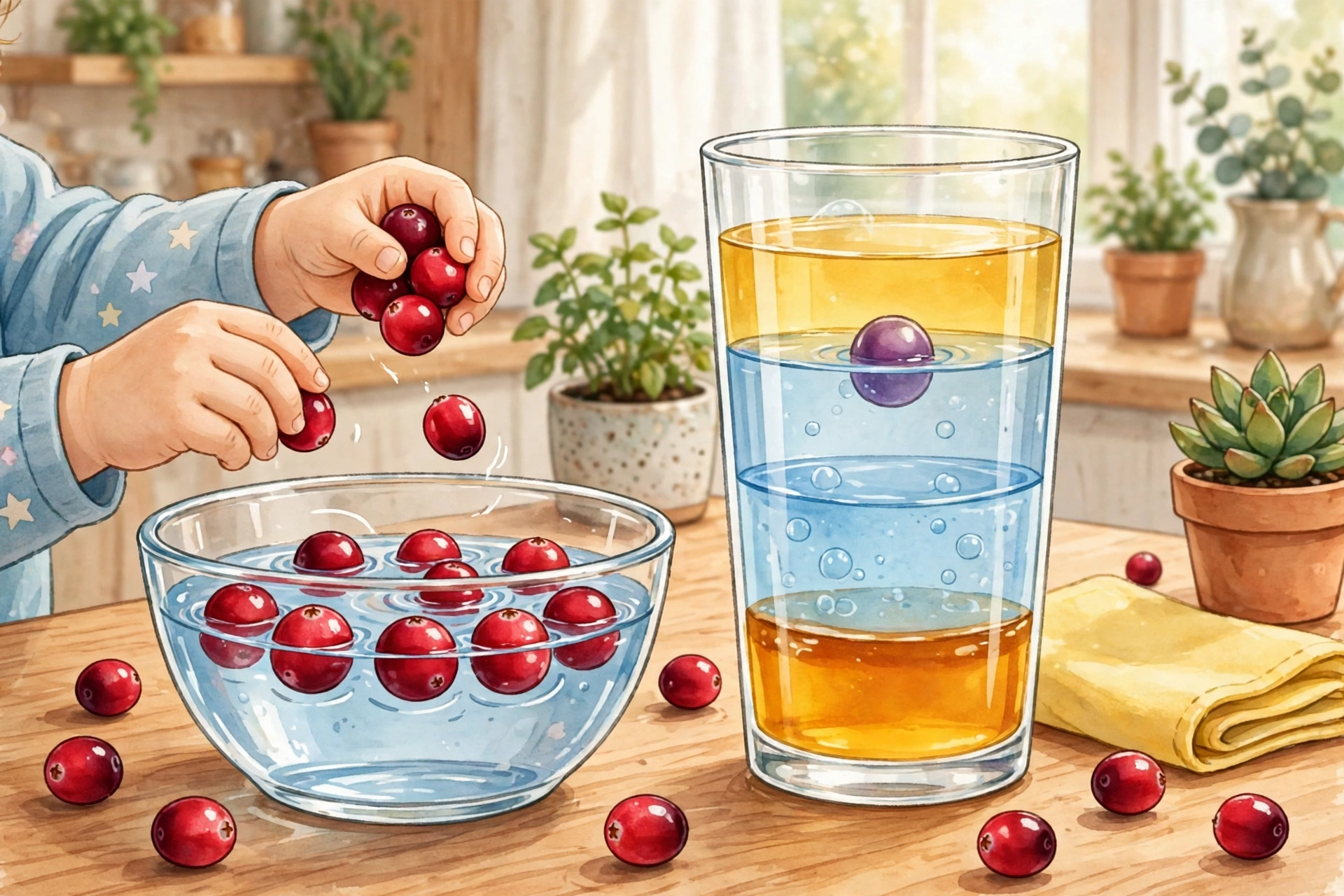
Drop a cranberry into the water. It floats. Now drop one onto the plate from a few inches up. A fresh cranberry bounces. Both surprises have the same explanation: a cranberry is full of tiny air pockets. The air makes it light enough to float and springy enough to bounce, a bit like a tiny ball.
Try this next: does a cranberry that has been cut open still bounce? Does it still float? Cut cranberries lose their air pockets, so the result changes — and that change is the experiment.
2. A Thanksgiving density tower
You will need: a clear glass, honey, dish soap, water, and cooking oil, plus a small grape and a small piece of pasta.
Pour the liquids slowly, in this order: honey, dish soap, water, then oil. Wait a minute and watch the layers settle. Now drop in the grape and the pasta. They stop at different layers.
Each liquid has a different density, which is how much mass is packed into the same amount of space. The heaviest liquid sinks to the bottom and the lightest floats on top. Objects sink until they reach a layer that is denser than they are, then they stop. Ask your child to predict where each object will stop before dropping it in.
3. Cranberry juice, the color-change detective
You will need: cranberry juice, two clear cups, white vinegar, and baking soda.
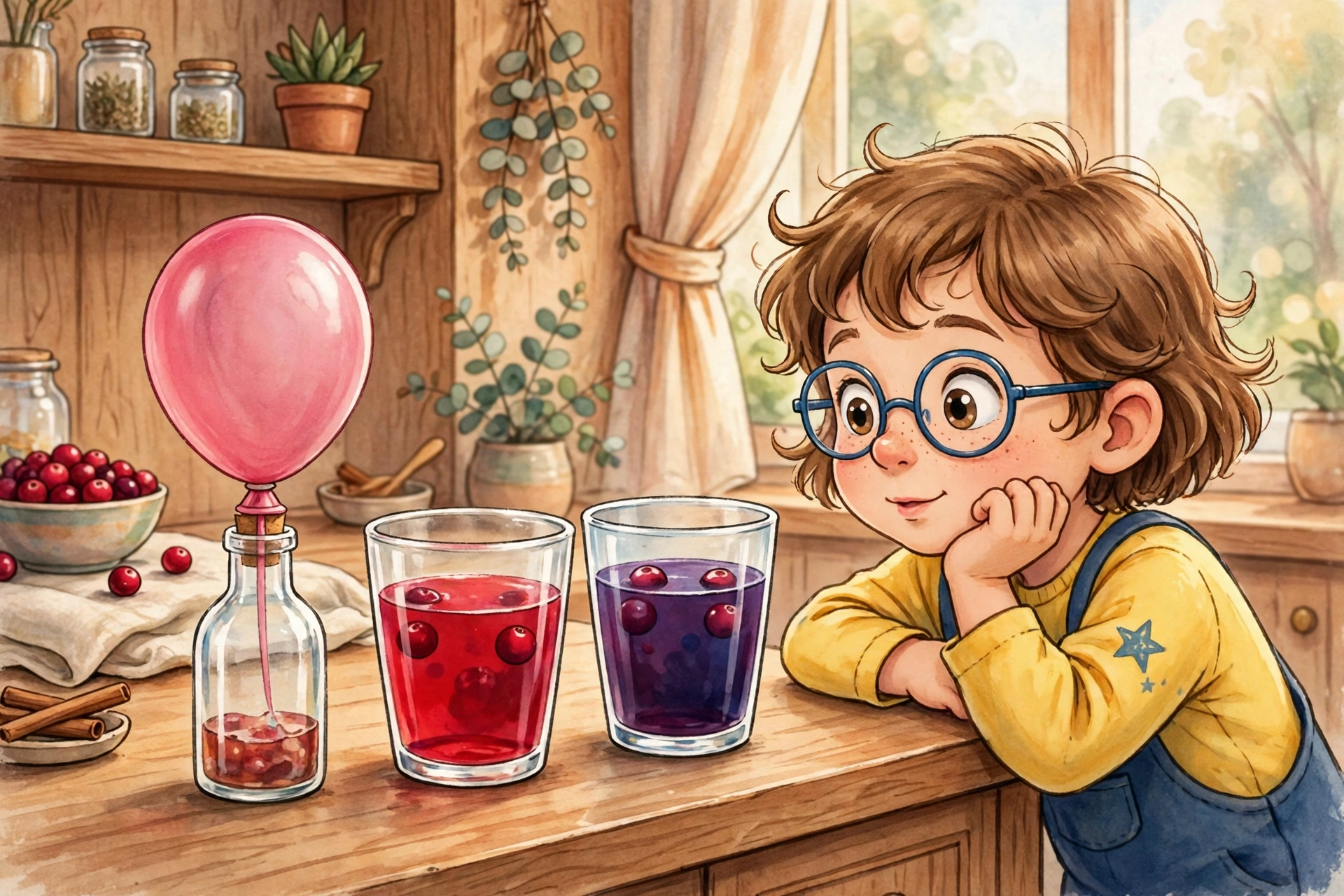
Pour a little juice into each cup. Add a spoonful of vinegar to one cup and a spoonful of baking soda to the other. Stir and compare the colors. One cup shifts toward red, the other toward a darker, bluish shade.
Cranberry juice contains natural pigments that change color depending on whether a liquid is acidic or basic. Vinegar is an acid, and baking soda mixed with water is a base. Scientists use the same idea with special indicator papers in a lab. Try it with another juice and see whether it changes color too — not every juice does.
4. The yeast balloon
You will need: a small bottle, warm water, a packet of active dry yeast, a spoonful of sugar, and a balloon.
Pour warm water into the bottle, stir in the sugar and yeast, then stretch the balloon over the bottle opening. Set the bottle in a warm spot and wait 20 to 30 minutes. The balloon slowly inflates, with no one blowing into it.
Yeast is a living organism. When it eats sugar, it releases a gas called carbon dioxide. That gas fills the balloon, and it is the same gas that makes bread dough rise in the oven. Try a second bottle without sugar and compare: less food for the yeast means less gas.
5. Popcorn, the pressure experiment
You will need: popcorn kernels, a pot with a lid, and a little oil. An adult must handle the stove.
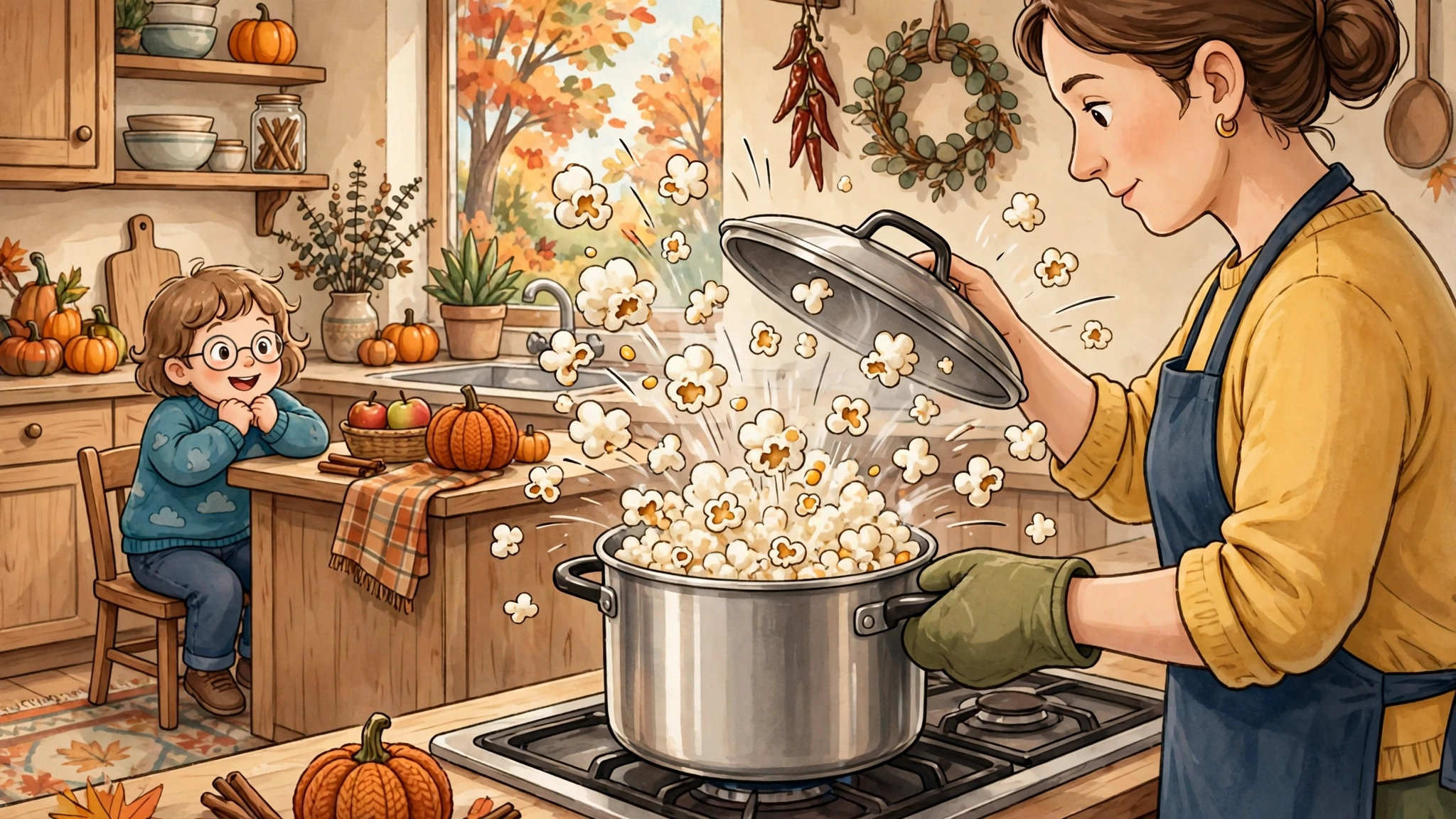
Popcorn kernels have a hard outer shell with a little water trapped inside. When the kernel heats up, the water turns to steam and pressure builds. At a certain point the shell gives way, the soft inside expands all at once, and you get popcorn. It is a small, safe version of how pressure can do sudden work.
Count how many kernels pop in the first minute versus the second minute. Then ask: does a lid change anything? Do older kernels pop as well as fresh ones? Every question is a new experiment.
Keep the curiosity going
The best part of kitchen science is that it does not end when the experiment ends. When your child asks “what if we try it this way instead,” that is the scientific method in action: observe, predict, test, and compare. Happy experimenting — and happy Thanksgiving from all of us at Club SciKidz NJ.
When you are ready for more hands-on science, explore our camp locations at https://northcentralnj.clubscikidz.com/camp-locations/ and see hours and fees at https://northcentralnj.clubscikidz.com/hours-and-fees/ — 2027 dates coming soon. To register, call us at 862-399-9942 or use https://campscui.active.com/orgs/clubscikidzcentralnewjersey.
The Club SciKidz NJ Team