Nothing says Halloween like a little friendly spookiness — and when you mix it with science, you get the perfect recipe for family fun. These five Halloween experiments use simple household materials, take just minutes to set up, and sneak in real STEM learning: chemical reactions, states of matter, air pressure, and polymer science.
Before you start: every experiment below is designed to be kid-safe and adult-supervised. A few involve hot water or vinegar, so keep an adult in the room and a towel nearby. Now let’s get spooky. 🎃
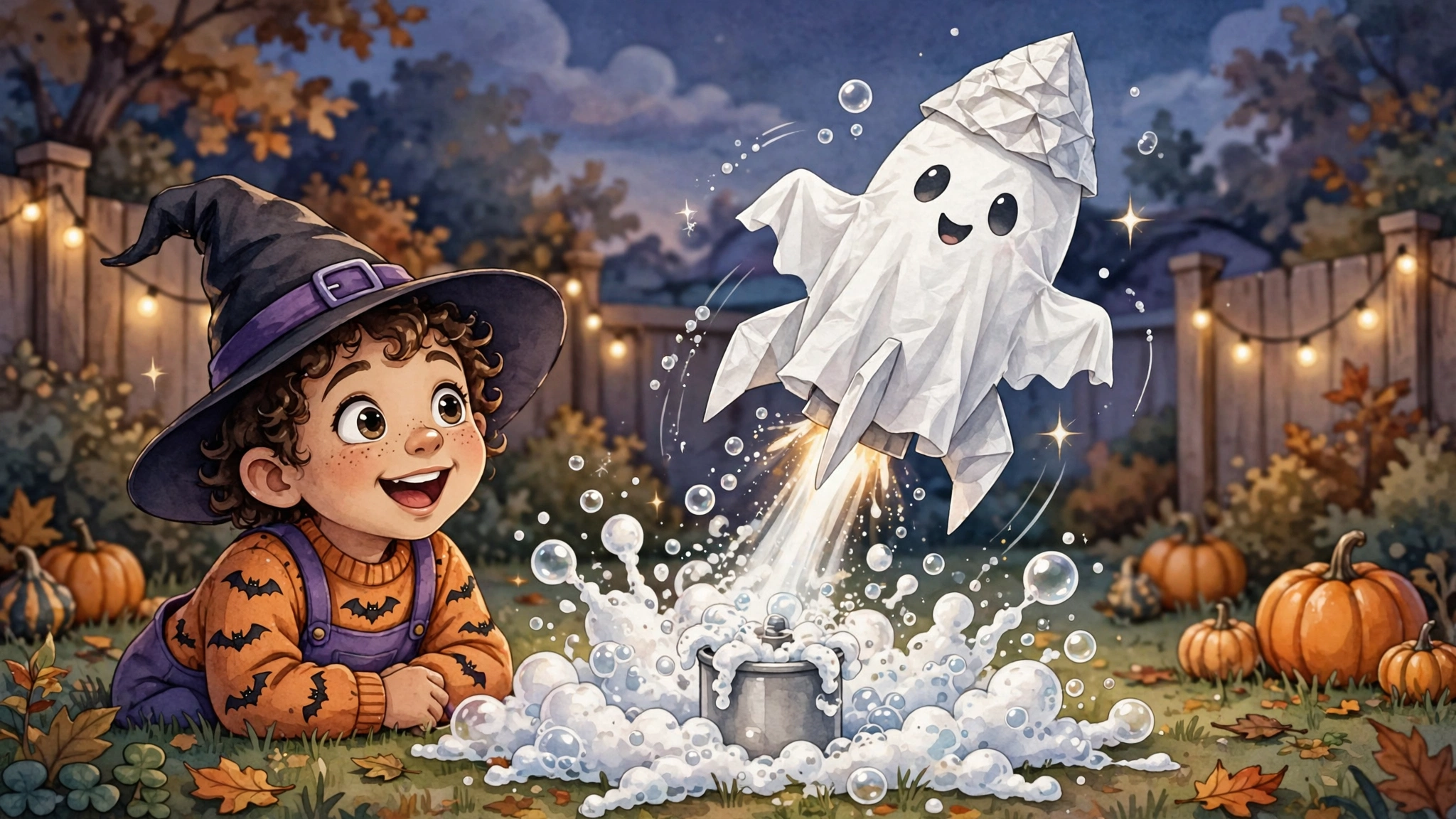
1. Ghost Rockets 👻
The science: Air pressure and Newton’s third law — the same physics that launches real rockets.
You’ll need: An empty plastic film canister (or small bottle with a tight cap), a fizzy antacid tablet (like Alka-Seltzer), water, white tissue paper or a coffee filter, tape, and a marker.
What to do:
- Decorate the tissue paper into a ghost with a marker, then tape it around the outside of the canister like a cape.
- Fill the canister about one-third full of water.
- Drop in half an antacid tablet, cap it quickly, set it upside down on the ground, and step back!
- Whoosh — the fizzing tablet builds gas pressure until POP, your ghost blasts skyward.
The learning moment: Ask your child to predict how high the ghost will fly. Will a full tablet beat a half tablet? Run the test three times and compare — that’s the scientific method in action.
2. Oozing Monster Slime
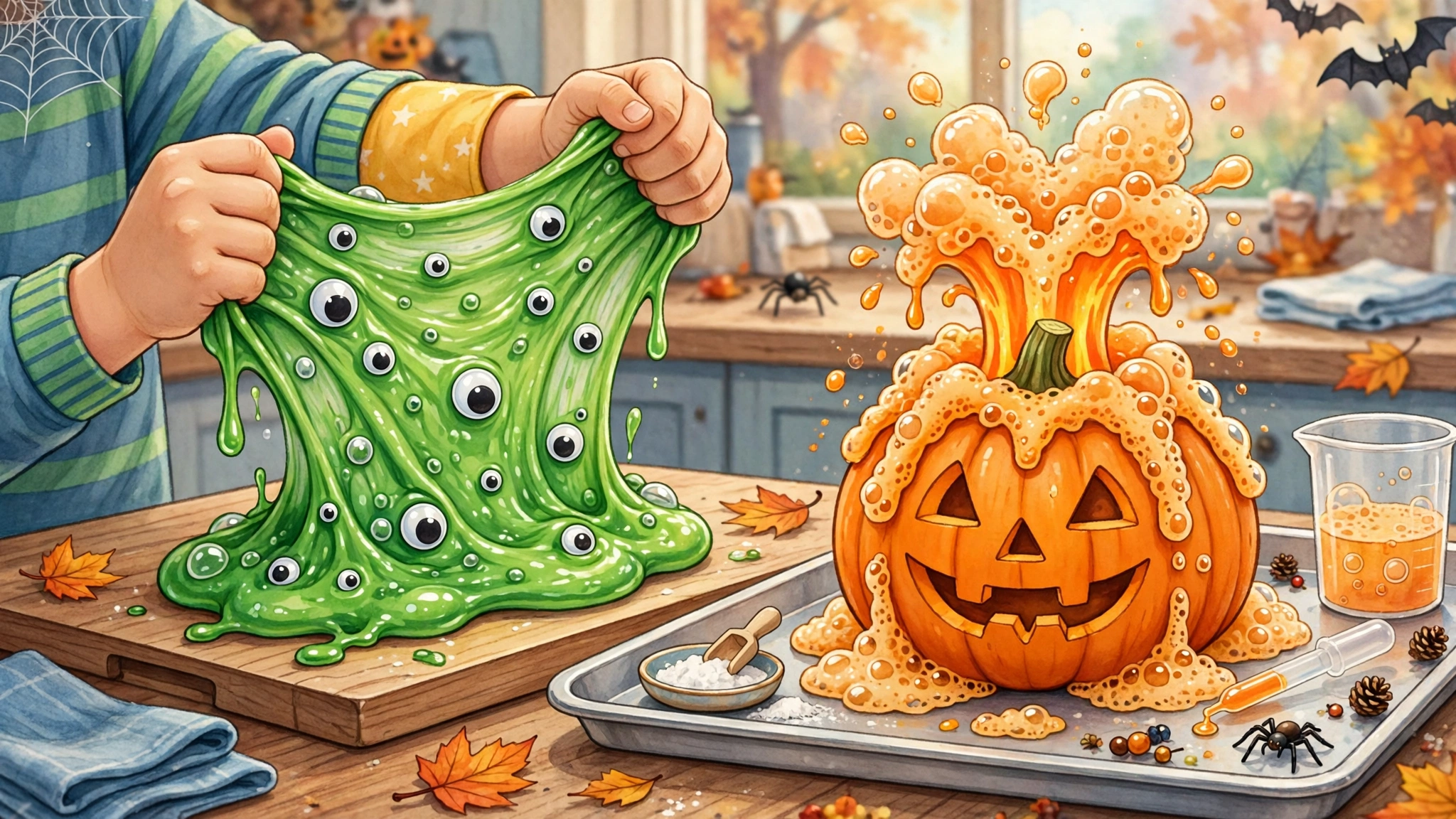
The science: Polymers. Glue contains long chains of molecules, and contact-lens solution (or a baking-soda-and-saline mix) links them into the stretchy stuff we call slime.
You’ll need: 1/2 cup white school glue, 1/2 cup water, 1/2 teaspoon baking soda, 1 tablespoon saline solution (contact lens solution), green food coloring, and a handful of plastic spider toys or googly eyes.
What to do:
- Stir the glue, water, and baking soda together in a bowl.
- Add a few drops of green food coloring and mix.
- Slowly add the saline solution while stirring until the slime pulls away from the bowl.
- Knead it with your hands for a minute, then hide plastic spiders inside for monster surprise slime.
The learning moment: Slime is neither a solid nor a liquid — it’s a non-Newtonian fluid. Let your child pull it fast (it snaps) and slow (it stretches). Weird, right? That’s real physics in your hands.
3. Fizzy Pumpkin Volcano
The science: Acid-base reaction — vinegar (an acid) meets baking soda (a base), releasing carbon dioxide bubbles.
You’ll need: A small hollowed-out mini pumpkin or a pumpkin-shaped cup, baking soda, white vinegar, dish soap, orange food coloring, and a baking tray.
What to do:
- Place the pumpkin on a tray and add 3 tablespoons of baking soda inside.
- Add a squirt of dish soap and a few drops of orange food coloring.
- Pour in the vinegar — watch the spooky orange foam bubble and overflow like lava!
The learning moment: Try changing one thing at a time: more vinegar, less baking soda, or warm versus cold vinegar. Which eruption is biggest? Young scientists learn that fair tests change only one variable.
4. Dancing Candy Corn (Dissolving Science)
The science: Gas bubbles and density — carbon dioxide bubbles grab onto the candy and carry it up, then release it back down.
You’ll need: A tall clear glass, club soda (or clear soda), and a handful of candy corn.
What to do:
- Fill the glass three-quarters full with club soda.
- Drop in the candy corn and watch it sink.
- Wait — soon the pieces start bobbing up and down like they’re dancing.
The learning moment: Ask your child why the candy floats up but the glass doesn’t. The answer is buoyancy and bubble power — the same principles that keep boats afloat. It’s the calmest experiment on this list, perfect for little ones.
5. Invisible Ghost Messages
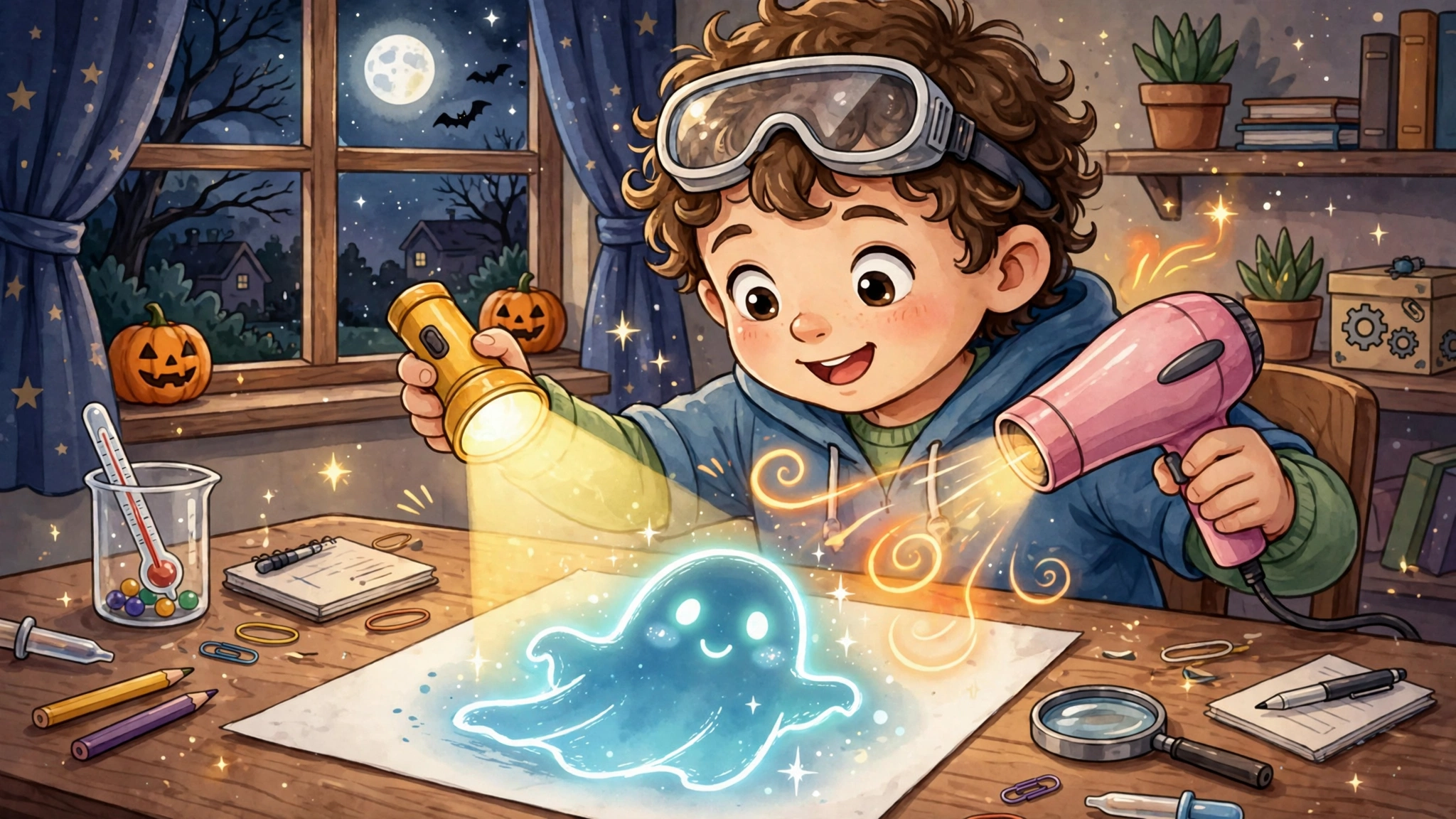
The science: Oxidation — lemon juice changes color when heated because its organic compounds brown faster than the paper around them.
You’ll need: Lemon juice, a cotton swab or paintbrush, white paper, and an adult with a warm (not hot) iron or a hair dryer.
What to do:
- Dip the swab in lemon juice and write a secret Halloween message on the paper. Let it dry completely — it will be nearly invisible.
- With an adult holding the hair dryer or warm iron nearby, gently heat the paper.
- The hidden message appears like magic, turning brown before your eyes.
The learning moment: This is a gentle introduction to the idea that heat changes matter. Older kids can try other “inks” — milk, onion juice — and compare which reveals the clearest message.
Bring the Curiosity to Camp
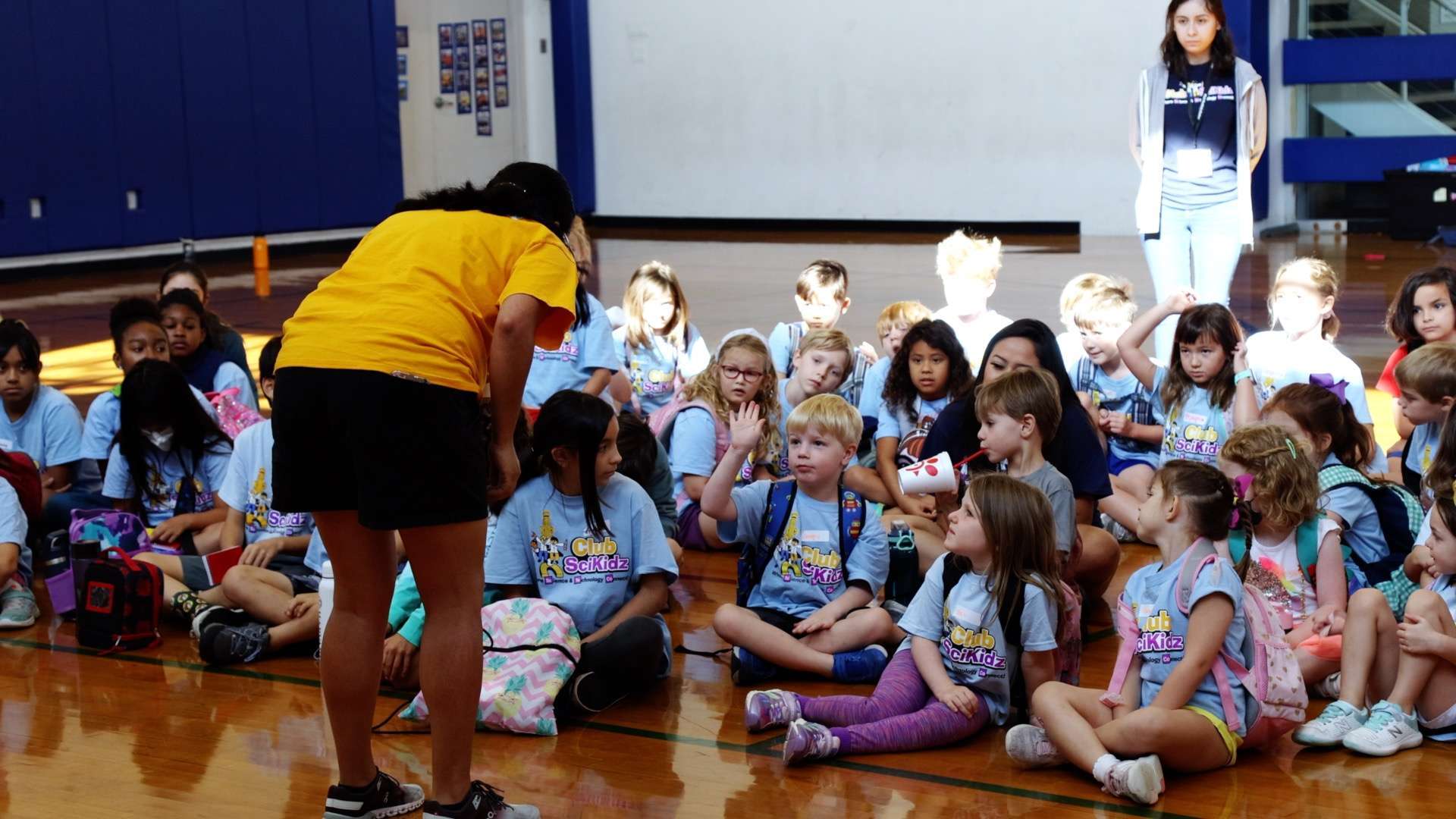
Halloween experiments are a great start, but if your child can’t get enough of hands-on science, imagine what they could do in a full week of STEM summer camp. At Club SciKidz NJ, kids ages 4–15 dive into robotics, chemistry, veterinary science, rocketry, and more — with a 1:10 camper-to-instructor ratio, W-2 staff, and STEM.org certification backing every program.
Our camps run Monday through Friday, 9:00am to 4:00pm, at three Morris County locations: Florham Park, Morristown, and Mountain Lakes. Learn more about our camp locations and see what a week of hands-on discovery looks like. You can also check our FAQs for camp details.
Ready to turn curiosity into confidence? Call us at 862-399-9942 or register online. And remember — 2027 dates coming soon, so now is the perfect time to start planning.
The Club SciKidz NJ Team