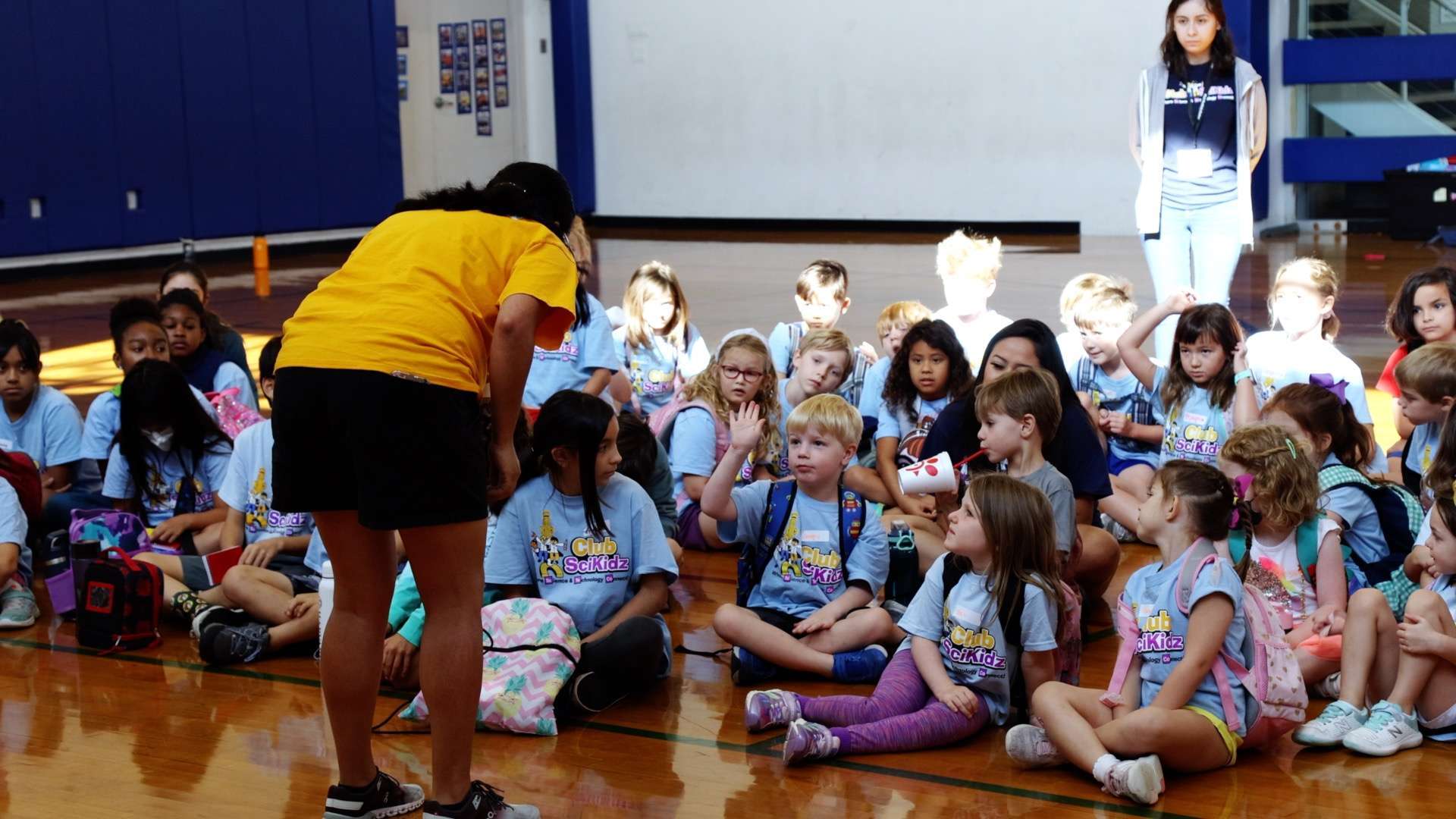
Fall in New Jersey is a scientist’s favorite season. The leaves are changing, the air is getting crisp, and nature is running experiments right outside our windows — no fancy equipment required. 🍂
If a rainy afternoon has your kids asking, “What can we do?” — here are five simple experiments using things you probably already have. Each takes less than 30 minutes and ends with a great question to talk about together.
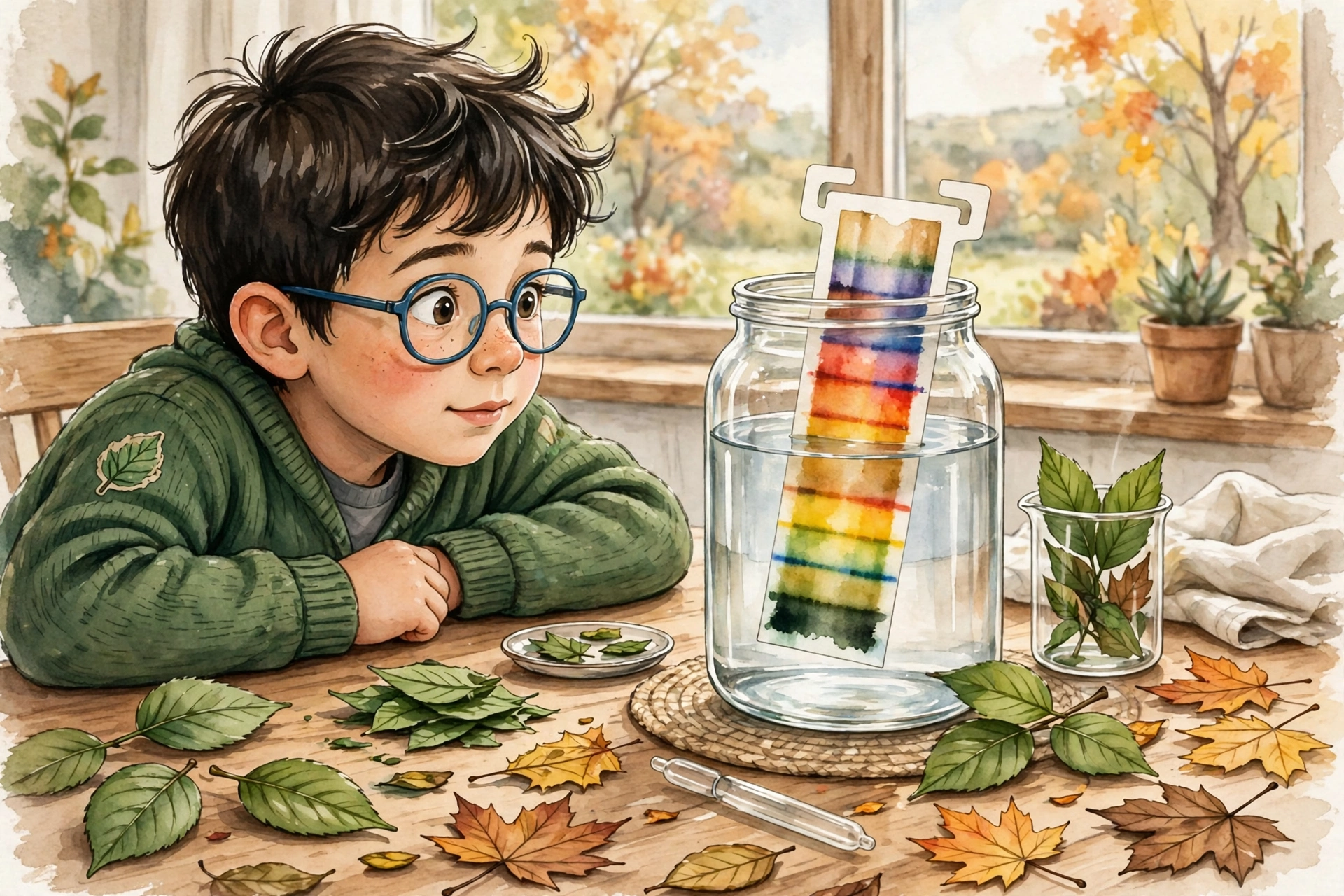
1. Leaf Chromatography: Reveal a Leaf’s Hidden Colors
Have you ever wondered why leaves turn red and gold in autumn? This experiment lets kids see the hidden pigments inside a green leaf.
You will need: a few fresh green leaves, rubbing alcohol, a clear jar, a coffee filter strip, and a pencil.
Tear the leaves into small pieces and place them in the jar. Pour in just enough rubbing alcohol to cover them. Hang the coffee filter strip so one end dips into the liquid, and wait about 30 minutes. As the alcohol travels up the filter, it carries the leaf’s pigments with it — and you will see bands of green, yellow, and sometimes orange appear.
Talk about it: Leaves are green in summer because chlorophyll hides the other colors. In fall, chlorophyll fades, and the yellows and oranges that were there all along finally show up.
2. The Apple Browning Test: Which Protector Works Best?
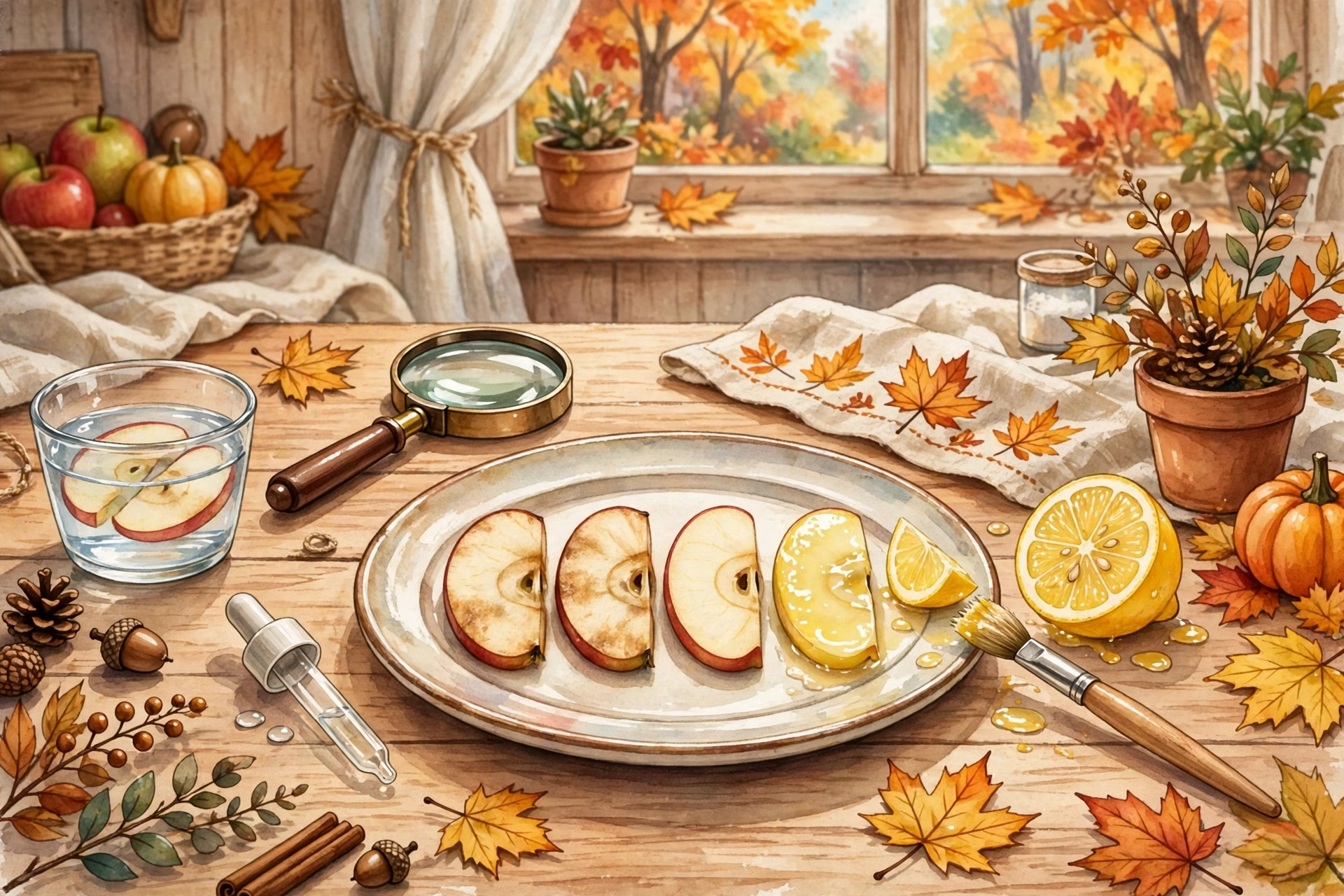
Cut an apple into slices and you will notice something right away: the slices start to turn brown. That is oxidation — oxygen in the air reacting with the apple. But can we slow it down?
You will need: one apple, lemon juice, water, and a small plate.
Cut the apple into four slices. Leave one plain, brush one with lemon juice, soak one in water for a minute, and wrap one tightly in plastic wrap. Check them after 30 minutes, then again after an hour. Which slice stayed freshest?
Talk about it: Ask your child to predict the winner before you start — making a prediction and then checking it is exactly how real experiments work.
3. The Pinecone Weather Predictor
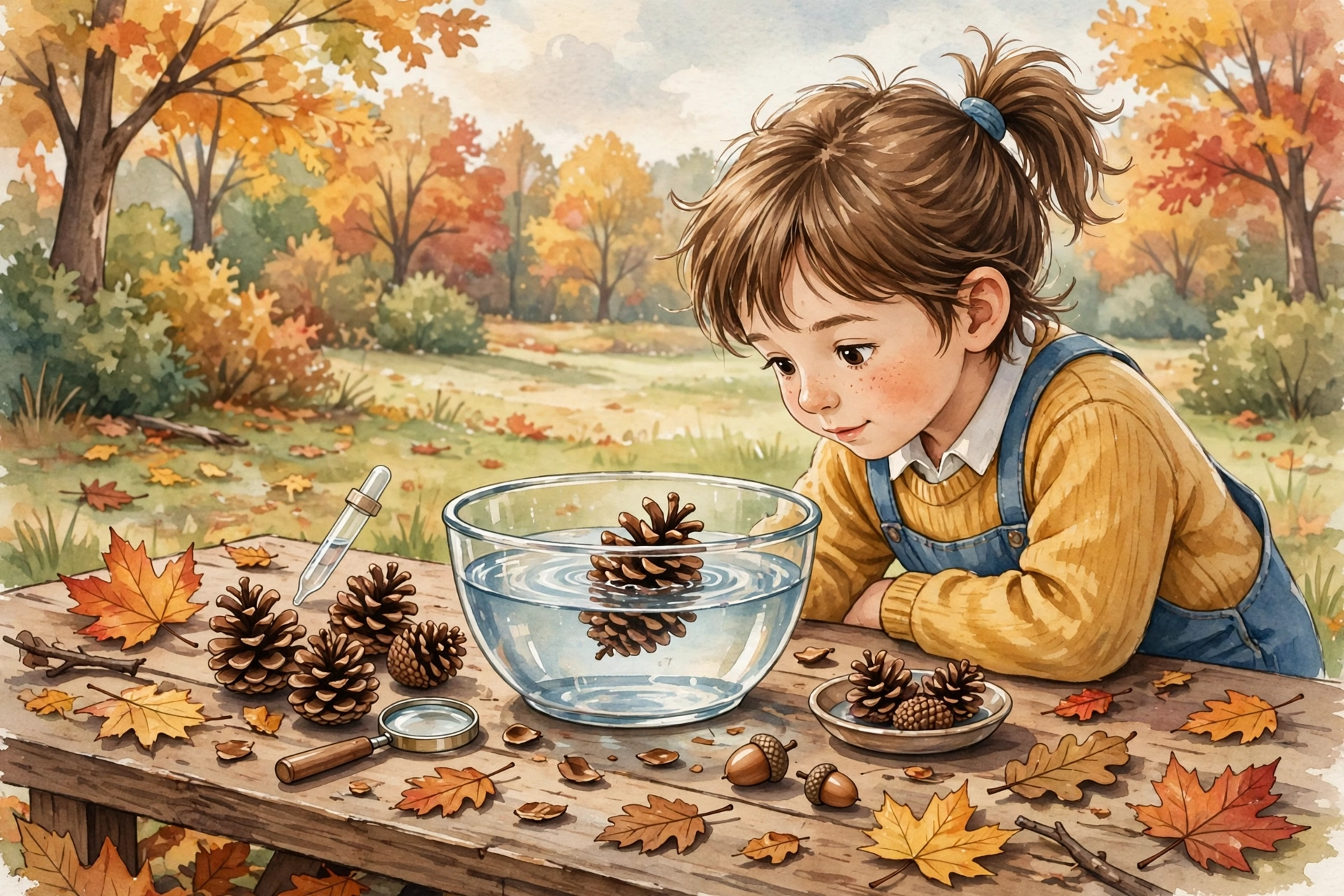
Pinecones open and close depending on the weather, and you can watch it happen in your kitchen.
You will need: two dry, open pinecones and a bowl of water.
Place one pinecone in the water and leave the other one dry on the counter. Check back in an hour or two. The pinecone in the water will slowly close its scales, while the dry one stays open.
Talk about it: In nature, a pinecone closes when it rains to protect its seeds, and opens when it is dry so seeds can travel on the wind.
4. Leaf Parachutes: A Race Against Air
Not all leaves fall the same way — and that is a physics lesson hiding in your backyard.
You will need: leaves of different shapes and sizes, plus a few small paper shapes you cut yourself.
Drop two different leaves from the same height at the same time. Which one lands first? Now try a flat, broad leaf against a narrow one, or a crumpled paper ball against a flat sheet of paper. Repeat the race three times to be sure.
Talk about it: Air pushes back against falling objects, and a bigger surface catches more air. That is why a broad leaf floats while a compact shape drops fast — the same idea behind parachutes.
5. Walking Water in Autumn Colors
This classic color-mixing experiment looks especially beautiful in red, yellow, and orange.
You will need: three clear cups, water, food coloring, and paper towels.
Fill two cups with water — color one red and one yellow — and leave the middle cup empty. Fold paper towels into strips and place one end in a colored cup and the other end in the empty cup. Wait an hour, then come back and watch.
Talk about it: Water climbs up the paper towel through tiny gaps, a process called capillary action — the same trick plants use to pull water up to their leaves. When red and yellow meet in the middle cup, you get orange, just like fall!
Tips for a Great At-Home Experiment Day
Keep it low-pressure. The goal is curiosity, not a perfect result. If an experiment does not work the first time, that is not a failure — it is a new question. Try changing one thing and test again. Let your child do the pouring, tearing, and observing, with an adult nearby for cutting and liquids.
Most of all, end with a question: “What do you think would happen if we tried it again tomorrow?” That question is where the next experiment begins. 🍁
Keep the Curiosity Going
At Club SciKidz NJ, hands-on experiments like these are how children learn best — by touching, testing, and asking questions, not just by watching.
Our full-day camps run Monday through Friday, 9:00am–4:00pm, for ages 4–15 at $540 per week, with pre-camp care from 8:00am and post-camp care until 5:30pm available. Half-day camps for ages 4–6 run 9:00am–1:00pm at $440 per week. Explore our three Morris County locations on our camp locations page; 2027 dates are coming soon.
Ready to plan ahead? Call us at 862-399-9942 or register here. We cannot wait to experiment with your young scientist!
The Club SciKidz NJ Team